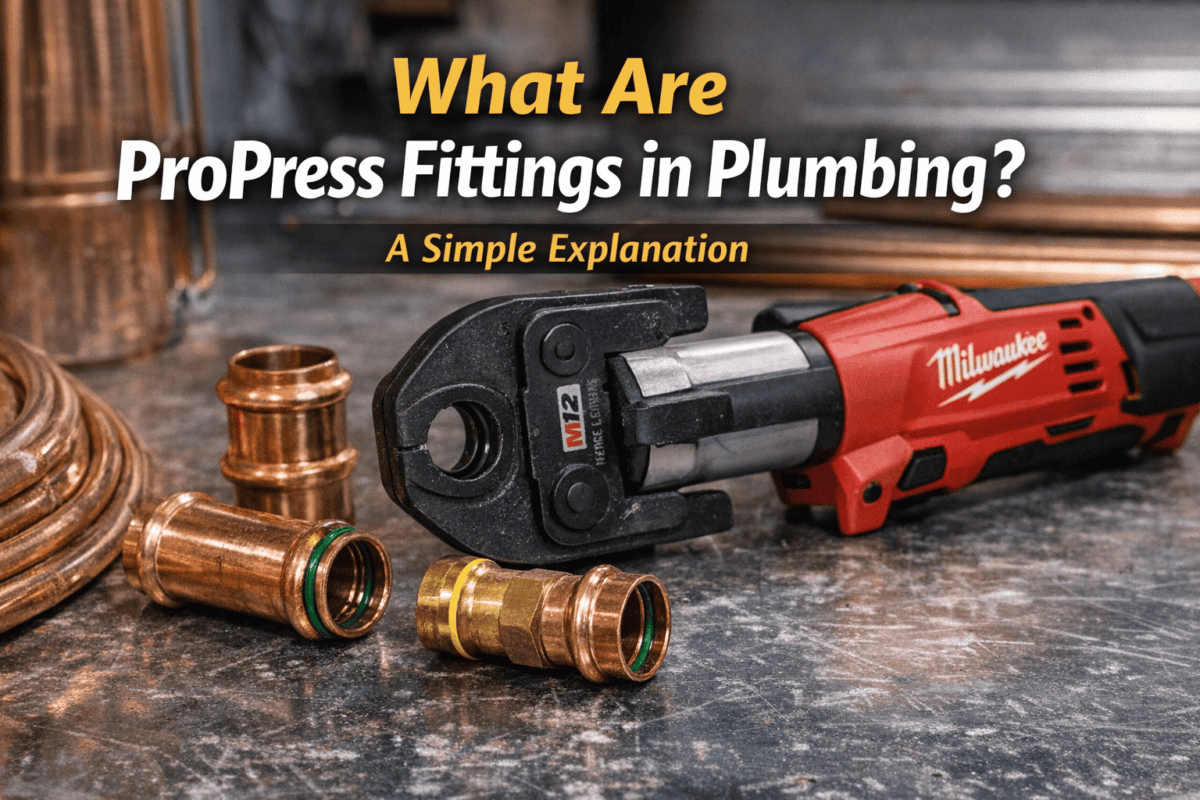
If you’ve heard the term “ProPress” used in plumbing and wondered what it means, you’re not alone. So what are Propress fittings in plumbing? ProPress fittings are a type of press-style copper fitting that are installed using a powered pressing tool instead of soldering with a torch. They’re commonly used in residential plumbing, light commercial applications, boilers, hydronic systems, and service repair work — and many plumbers prefer them because they are fast, reliable, and eliminate the need for an open flame.
In this article, I’ll explain what ProPress fittings are, what they’re used for, and when they make sense in residential plumbing — based on real-world experience working with plumbers, contractors, and plumbing materials every day.
I work closely with plumbers, contractors, and plumbing material suppliers every day, and my goal in this article is to share practical, real-world insight into how ProPress fittings are used in residential plumbing.
Disclosure: This article may contain affiliate links. If you purchase a product through one of these links, I may earn a small commission at no additional cost to you. This helps support the site so I can continue creating helpful plumbing education content.
What Are ProPress Fittings Used For?
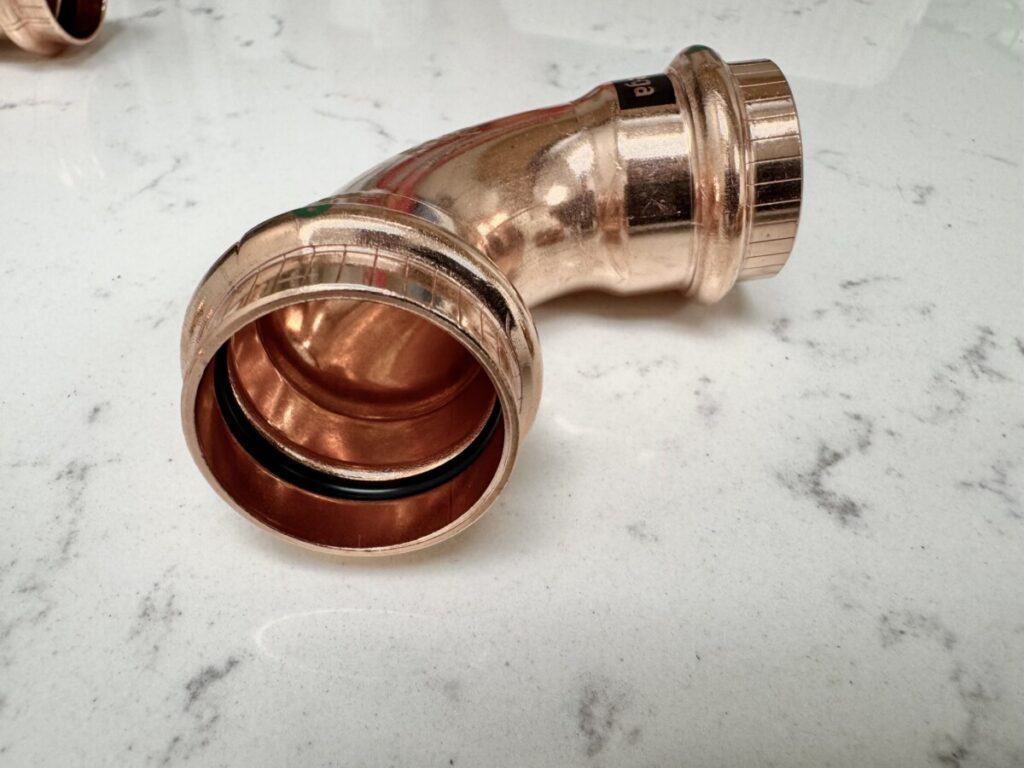
ProPress fittings are most commonly used on copper water piping systems, and they work by creating a permanent mechanical seal when the fitting is pressed onto the pipe using a specialized hydraulic or battery-powered press tool. Inside the fitting is an O-ring that compresses during the pressing process to create a watertight seal.
In real-world plumbing work, ProPress fittings are frequently used for:
- Residential water supply lines
- Water heater replacements
- Remodels and repipe projects
- Plumbing service and repair jobs
- Boiler and hydronic heating systems
- Mechanical rooms and equipment connections
- Multi-unit and apartment buildings
- Tight spaces where soldering is difficult
- Jobs where open flame is risky or not allowed
One of the biggest reasons plumbers like using ProPress is speed and efficiency — especially on service calls and retrofit work.
With soldering, the line must be completely drained and completely free of water at the joint, otherwise the solder joint will not seal properly. With ProPress, plumbers can often make repairs faster without fully draining an entire system, which can save a significant amount of time on the job.
Why Many Plumbers Prefer ProPress Over Soldering (Especially in Homes)
Soldering copper is still widely used and absolutely has its place, but there are several advantages to ProPress in everyday plumbing work.
Benefits of ProPress fittings include:
- Faster installation and repair time
- No open flame or torch required
- Reduced fire risk in finished homes and attics
- Great for working in tight or awkward spaces
- Less downtime for homeowners during repairs
- More consistent, repeatable joint quality
- Less physical strain and repetitive stress on the body
Many plumbers also use:
- a Milwaukee battery-powered copper cutter to cut pipe, and
- a Ridgid (or similar) battery-powered press tool to press fittings. I’ve linked the Ridgid ProPress tool as a cheaper option for your homeowner projects.
This creates a very efficient workflow and helps reduce wear-and-tear on hands, shoulders, and elbows over time — which is something many career plumbers value highly.
While ProPress fittings are more expensive than standard copper fittings, the labor savings and reliability often make them the better value overall, especially in residential repair work and remodels.
Recommended Tool — Milwaukee M12 ProPress Tool
If you’re considering doing ProPress work yourself or upgrading your plumbing tools, the Milwaukee M12 ProPress tool is one of the most widely used options among residential plumbers. It’s lightweight, reliable, and works great for tight spaces.
👉 Check current price on Amazon:
Milwaukee M12 ProPress Tool Kit
Do ProPress Fittings Replace Soldering Completely?
No — soldering is still widely used and absolutely still valid.
There are situations where soldering may still be preferred, including:
- Very small or tight detail work
- Certain small spot repairs
- Situations where material cost must be minimized
- Specialty applications where press fittings aren’t approved
ProPress isn’t a “cheaper shortcut” — it’s simply another professional-grade joining method that excels in certain applications.
Most plumbers today use both methods, choosing whichever is best for the job.
Gas-Rated ProPress Fittings (Important to Know)
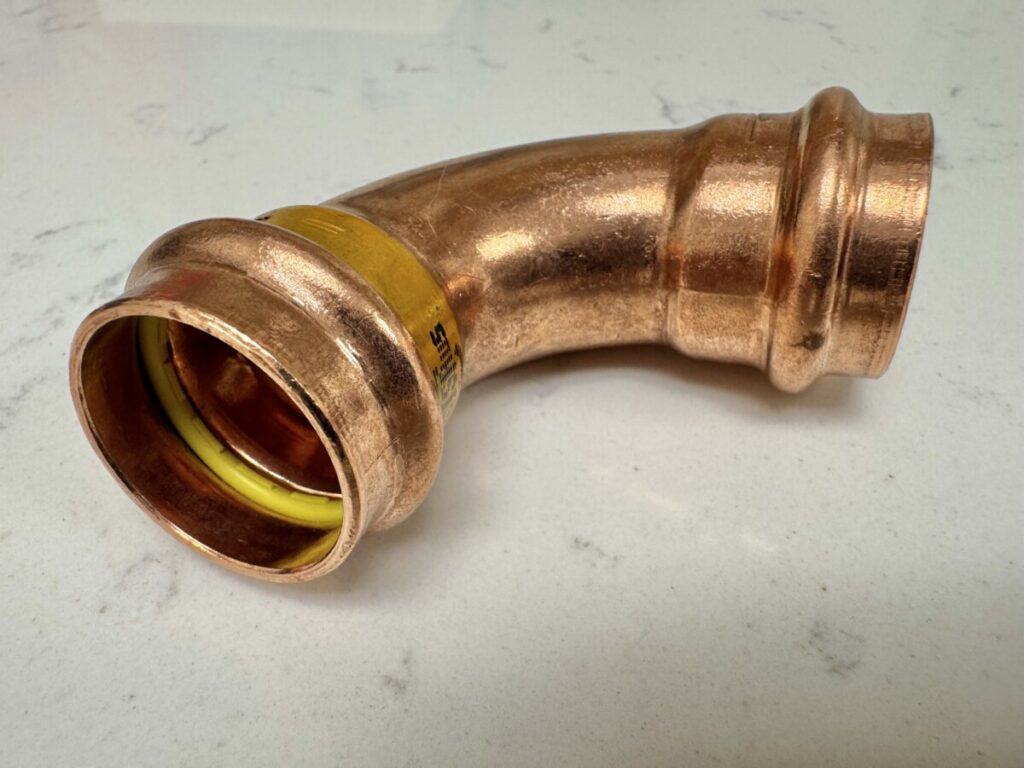
There are also gas-rated ProPress fittings made specifically for copper gas lines.
These are not the same as standard water press fittings.
A key manufacturer in this category is NIBCO, who produces gas-rated ProPress copper fittings designed for appropriate piping systems. These fittings typically:
- must be installed with Type L copper
- are engineered and tested for gas service applications
- can usually be identified by yellow marking or labeling
Water-rated press fittings are commonly identified by green markings.
However — marking colors may vary by product and manufacturer, so plumbers should always:
👉 confirm rating, application approval, and compatibility directly with the manufacturer.
This is especially important for gas, steam, or specialty system work.
Prep & Installation Matters (Protecting the O-Ring Seal)
Even though ProPress is faster than soldering, proper pipe preparation is still critical.
Before pressing a fitting, plumbers must:
- Ream and deburr the copper pipe
- Ensure the pipe is clean and smooth
- Avoid scratching or damaging the O-ring
- Fully seat the pipe into the fitting
- Verify the joint is fully pressed before charging the line
The O-ring inside the fitting creates the seal — so any debris, sharp edges, or contamination can compromise the joint.
Like any plumbing system, the quality of the installation matters just as much as the product itself.
Transition & Specialty ProPress Fittings in plumbing
Beyond standard copper-to-copper fittings, there are many specialty press fittings available, including:
- Press fittings that transition from copper to PEX crimp
- Press fittings that transition to PEX expansion systems
- MegaPress fittings (Viega) designed for black iron pipe applications
While the most common residential use is still water ProPress fittings, gas-rated press fittings and specialty press solutions are becoming more widely used in both residential and light commercial work.
That said — application suitability should always be verified with the manufacturer, especially for steam, high-temperature, or specialty systems.
Are ProPress Fittings Good for Residential Plumbing?
Yes — ProPress fittings are widely used in residential plumbing today and are especially beneficial in:
- Emergency repairs
- Remodels and repipes
- Crawlspaces, attics, and tight areas
- Occupied homes where open flames are a concern
- Jobs where speed and downtime matter
From a homeowner standpoint, the main takeaway is this:
👉 ProPress fittings are a professional joining method — not a shortcut — and when installed properly, they are reliable and commonly used in modern plumbing systems.
The materials may cost more than soldering, but the labor savings, safety benefits, and service efficiency are often well worth it.
FAQ — ProPress Fittings in Plumbing
Are ProPress fittings as reliable as soldered copper joints?
When installed correctly on properly prepared pipe, ProPress fittings are considered a reliable and code-approved joining method and are widely used in professional plumbing.
Do ProPress fittings ever leak?
Leaks are uncommon but can occur if:
- the pipe is not cleaned or deburred
- the fitting is not fully pressed
- the O-ring is damaged
- the fitting is used in the wrong application
Proper prep and installation are key.
Are ProPress fittings approved for gas lines?
Yes — gas-rated press fittings do exist, and NIBCO is a key manufacturer of copper gas press fittings. Make sure you are using with a copper rated pipe. However, gas fittings must be specifically rated and approved for that use, and plumbers must follow local code and manufacturer requirements.
Can homeowners install ProPress fittings themselves?
While some homeowners may own press tools, ProPress systems are primarily designed for professional plumbing installation. The tools are expensive, and proper training, prep, and application knowledge are important to ensure a safe, reliable joint.
Is ProPress better than soldering?
It depends on the job.
ProPress is generally better for:
- service work
- repairs
- tight spaces
- occupied homes
- faster project completion
Soldering may still be better for small repairs, budget-sensitive work, and certain specialty applications.
Most plumbers use — and value — both methods.
Closing Thoughts
I hope this simple explanation helped you understand what ProPress fittings are and how they’re used in modern residential plumbing. From working closely with plumbers and contractors over the years, I’ve seen firsthand why many professionals prefer ProPress — especially for repairs, remodels, and real-world service work where safety, speed, and reliability matter.
If you found this helpful, you may also like my other plumbing education articles on common plumbing components and systems — they’re written to help homeowners better understand how their plumbing works and make informed decisions.
If you’re interested in learning about another important plumbing component, check out my article on What Is an Air Chamber in Plumbing? And Why They’re Important — it explains how air chambers help reduce water hammer and protect your plumbing system.
I work closely with plumbers, contractors, and plumbing material suppliers every day, and my goal in this article is to share practical, real-world insight into how ProPress fittings are used in residential plumbing.