
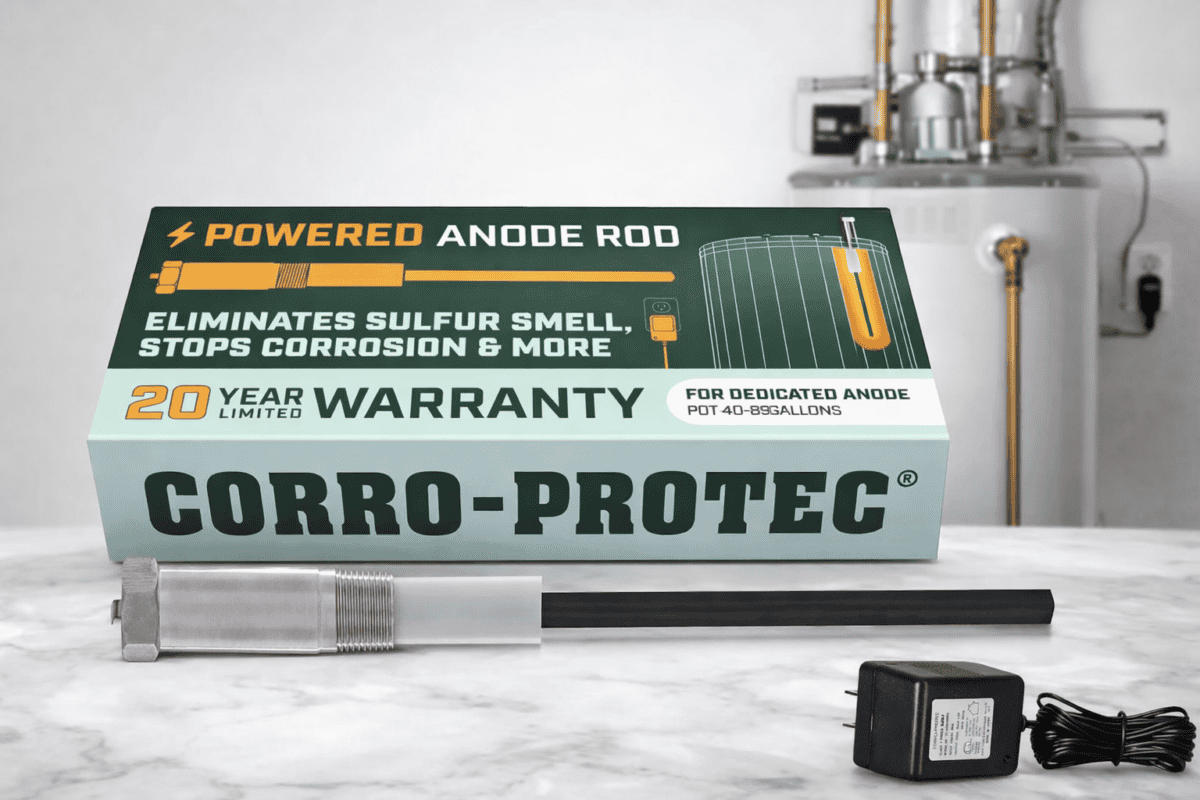
What Are Powered Anode Rods? Answer: Powered anode rods (also called electric anode rods) are electronic corrosion-prevention systems that replace a traditional magnesium or aluminum anode rod inside a water heater. Instead of sacrificing metal to protect the tank, a powered anode uses a small, low-voltage current to stop corrosion — helping extend tank life and often reducing rotten-egg “sulfur” odors in the water.
If you’re researching what are powered anode rods, they are an electronic replacement for traditional sacrificial anode rods and are designed to protect your water heater tank while reducing corrosion and odors.
Credibility Note: I’ve worked in the wholesale plumbing industry for nearly a decade and regularly help plumbers and homeowners choose the right anode rod and water heater parts for their systems.
Affiliate Disclosure: This post may contain affiliate links. If you purchase through my links, I may earn a small commission at no extra cost to you. This helps support the site — thank you.
What Are Powered Anode Rods? (And Why Plumbers Recommend Them)
A powered anode rod protects the inside of your water heater tank from corrosion but it does it differently than a traditional anode.
Traditional anode rods sacrifice metal to protect the tank (magnesium or aluminum). Over time, they corrode away and must be replaced.
A powered anode rod:
- uses a small plug-in power supply
- delivers a controlled electrical signal
- prevents corrosion without dissolving
- doesn’t add sediment or metallic debris to the tank
Homeowners like them because they:
- can help reduce or eliminate rotten-egg / sulfur odor
- work well in homes with soft water
- may extend tank lifespan
- require less frequent replacement
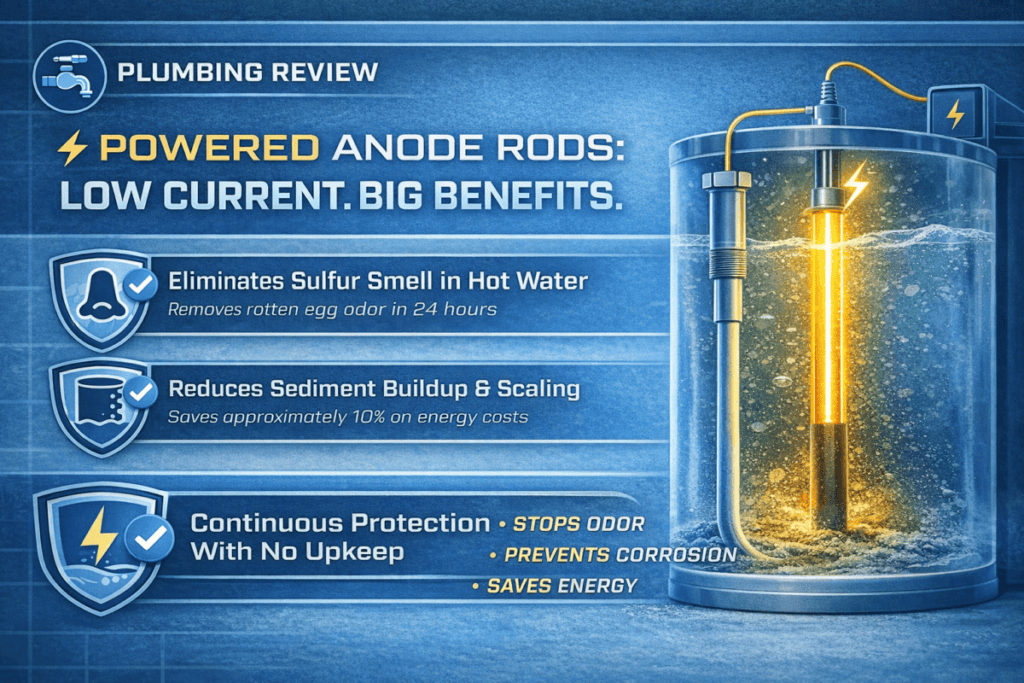
While traditional anode rods rely on sacrificial metal to protect the tank, a powered anode works in a much more controlled and consistent way. Instead of slowly corroding, it actively prevents corrosion by sending a small electrical signal through the tank’s lining. This makes powered anode rods especially appealing to homeowners who want a more permanent, low-maintenance solution for water heater protection.
📌 IMPORTANT: Make Sure the Powered Anode Rod Fits Your Water Heater
This is one of the biggest mistakes people make when ordering online. Compatibility is the most important factor when choosing a powered anode rod. Even though many models are designed to be universal, certain water heater brands — especially Bradford White — are built differently and require a brand-specific version. Taking a minute to verify tank size and thread design before ordering can save a lot of frustration during installation.
Powered anode rods are designed for specific:
- water heater tank sizes
- thread locations
- brands or tank configurations
For example, Corro-Protec offers:
- models sized by tank capacity (10–80 gallon, etc.)
- a Bradford White-specific powered anode rod (only for Bradford White heaters)
- a universal powered anode for most other tank brands
Before buying, confirm:
- your water heater brand
- tank size (gallons)
- anode rod location
- whether your model requires a special adapter
And one more important detail:
👉 Powered anode rods require an outlet nearby for the power supply.
If your heater is in a basement or closet without a nearby plug — you may need an electrician to add an outlet.
🧲 Powered Anode Rod vs Magnesium Anode Rod — What’s the Difference?
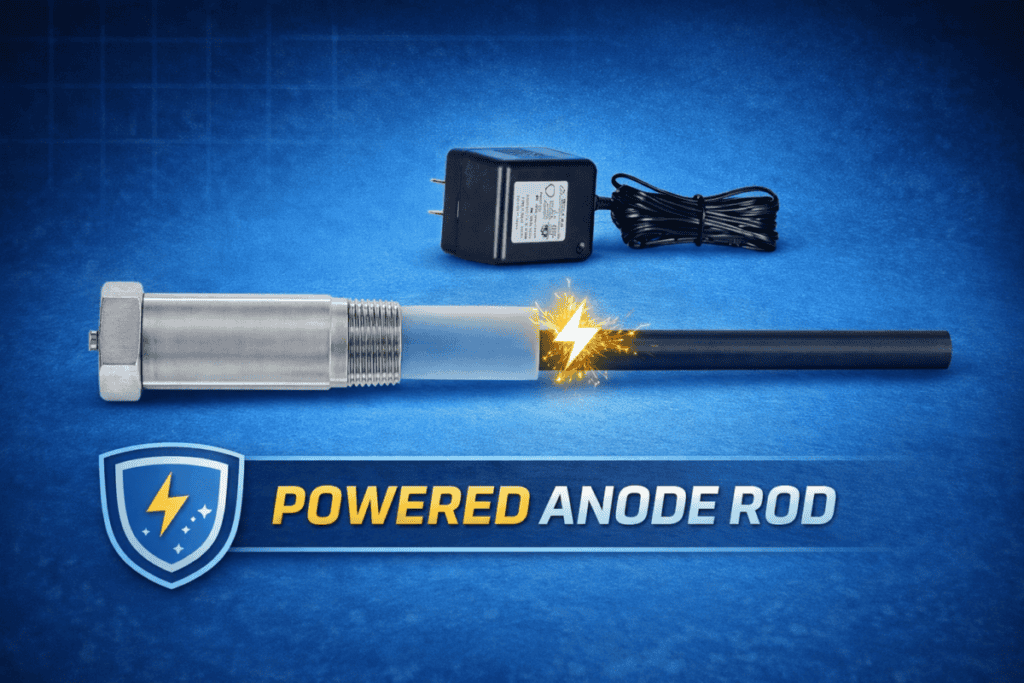
Here’s a practical, plumber-focused comparison.
Many homeowners search for what are powered anode rods when comparing them to magnesium anode rods because they want a long-term, maintenance-free solution.
Traditional Magnesium / Aluminum Anode Rod
Works best for:
- normal city water
- homes without odor issues
- homeowners comfortable replacing rods every few years
Pros:
- affordable
- proven technology
- protects well in standard conditions
Cons:
- can contribute to rotten-egg / sulfur smell in some water
- dissolves over time and requires replacement
- can create sediment / residue in tank
For homeowners dealing with sulfur or rotten-egg odor in hot water, learning what are powered anode rods and how they treat odor problems can make a big difference.
Both options can protect a water heater effectively — the real difference comes down to water quality, maintenance preferences, and long-term expectations. Many homeowners start with a traditional magnesium anode rod and later upgrade to a powered anode once odor problems or premature corrosion begin showing up. In other homes, a powered anode is chosen right away as a preventative upgrade to protect an expensive or newer water heater.
Powered (Electric) Anode Rod
Works best for:
- well water with odor problems
- softened water systems
- homes with recurring smell or corrosion issues
- extending tank lifespan
Pros:
- doesn’t corrode or break down
- often reduces or eliminates sulfur smell
- produces no sediment
- typically lasts as long as the water heater
- great upgrade for high-end or well-maintained systems
Cons:
- higher upfront cost
- must be plugged into a power source
- must be purchased in the correct model for your heater
💡 Are Powered Anode Rods Worth It?
From real-world feedback we see daily — yes, in the right situations. Deciding whether a powered anode rod is worth the investment really depends on your plumbing system and what problems you’re trying to solve. In some homes, the benefits are primarily long-term — extending tank life and reducing maintenance. In others, the value is noticed immediately, especially when it eliminates persistent sulfur or rotten-egg odor in the hot water.
They are especially worth considering if:
- Your water smells like sulfur or rotten eggs (powered anode rods help reduce that odor)
- The home has softened water, which can cause magnesium rods to corrode faster
- Long-term corrosion protection is a priority
- The existing anode rod deteriorates quickly
- You plan to keep the heater for many more years
They are less necessary if:
• The water heater is being replaced soon
• Water quality is generally good and corrosion isn’t an issue
• Lowest upfront cost matters more than long-term performance
🔌 Things to Check Before Installing a Powered Anode Rod
Before purchasing:
- confirm compatibility with your heater brand
- verify tank size (10–80 gallon etc.)
- check whether your model is universal or brand-specific
- make sure you have an outlet nearby
- ensure the old rod can be removed safely
If you’re ever unsure about compatibility or installation, it’s always a good idea to confirm details with the manufacturer or speak with a licensed plumber. Powered anode rods are very reliable when matched correctly to the water heater, but choosing the wrong model or forcing a difficult installation can lead to problems that are easily avoided with a quick professional opinion.
And as we always recommend:
👉 if you’re unsure — check with the manufacturer or your plumber
Protecting the tank only works if the rod is properly matched to your system.
🧾 FAQ — Powered Anode Rods
Do powered anode rods stop rotten-egg smell?
In many homes, yes. They help reduce odor caused by bacteria interaction with magnesium anodes.
Do they work with Bradford White water heaters?
Yes — but Bradford White models usually require a brand-specific powered anode. Check compatibility before ordering.
Do powered anode rods require maintenance?
Very little — they typically last the life of the water heater.
Can I install one myself?
Many DIY homeowners can — but removing the old rod can be difficult. Some prefer to have a plumber install it.
Conclusion
Powered anode rods aren’t necessary for every home, but when they’re installed in the right situation, they can make a big difference in water heater performance and lifespan. Whether you’re trying to eliminate sulfur odor, reduce corrosion, or simply want a lower-maintenance alternative to a traditional anode rod, they offer a modern and reliable approach to tank protection. As long as the model is properly matched to your water heater and installed correctly, a powered anode rod can be a worthwhile upgrade for many homeowners.
If you’re maintaining or upgrading your water heater, you may also find this helpful: Do I Need a Water Heater Expansion Tank? It explains when expansion tanks are required, how they protect your plumbing system, and why many modern homes need one.